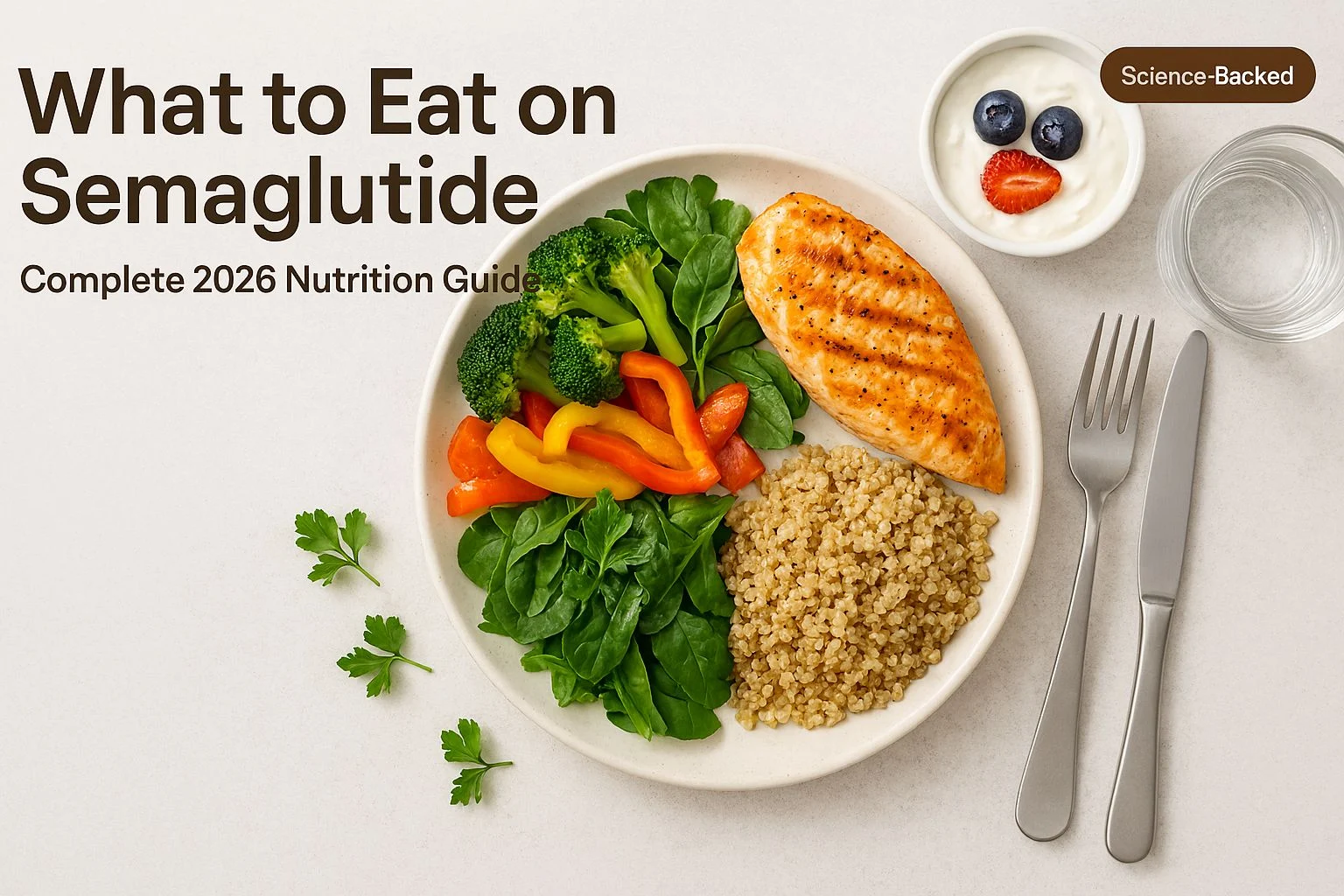
Standing at your refrigerator after your first semaglutide injection, wondering what to eat on semaglutide that won’t trigger nausea? You’re experiencing what millions discover: understanding what to eat on semaglutide completely transforms your weight loss success—and knowing what to eat on semaglutide determines your results.
The truth nobody mentions? Nearly half of patients taking higher semaglutide doses now lose 20% or more of their body weight, but approximately 40% of that weight loss comes from lean muscle mass if you don’t eat strategically. Learning what to eat on semaglutide strategically determines whether you emerge leaner and stronger—or just smaller and weaker. Your semaglutide nutrition plan is the difference between success and disappointment.
This comprehensive guide reveals exactly what to eat on semaglutide in 2026, answering every question about what to eat on semaglutide for optimal results, backed by the latest clinical research and designed to maximize fat loss while preserving muscle.
How Semaglutide Changes What You Should Eat
Before diving into what to eat on semaglutide specifically, understanding the medication’s metabolic effects clarifies why certain foods work better when planning what to eat on semaglutide daily.
Semaglutide—sold as Ozempic (diabetes), Wegovy (weight management), and Rybelsus (oral formulation)—mimics your body’s natural GLP-1 hormone. This creates three dramatic shifts that transform what to eat on semaglutide:
Appetite Suppression: Semaglutide reduces daily calorie intake by approximately 24% by signaling your brain that you’re full. The reduced food intake makes every bite count nutritionally.
Delayed Gastric Emptying: Food stays in your stomach significantly longer on semaglutide therapy. This explains why high-fat meals that normally digest slowly can trigger nausea when combined with GLP-1 medications.
Altered Food Preferences: Research indicates semaglutide may reduce cravings, especially for high-fat foods. Many patients report losing interest in previously favorite foods.
Recent 2025 STEP UP clinical trials involving 512 adults demonstrated that a 7.2 mg weekly semaglutide dose led to 19% average weight loss over 72 weeks, far exceeding the standard 2.4 mg formulation. These metabolic changes mean what to eat on semaglutide requires strategic food selection. Your semaglutide meal plan must account for these effects when choosing what to eat on semaglutide each day.
The Protein Priority: What to Eat on Semaglutide First
When deciding what to eat on semaglutide, protein becomes your top priority. Understanding what to eat on semaglutide means prioritizing protein above all else when appetite drops dramatically. Women and older adults taking semaglutide face higher risk for muscle loss, but higher protein intake helps prevent this, according to research presented at ENDO 2025.
How Much Protein on Semaglutide?
The protein requirements for what to eat on semaglutide exceed standard recommendations:
- Baseline: 0.8-1.0 grams per kilogram body weight daily
- Active Individuals: 1.2-1.6 grams per kilogram
- Optimal Muscle Preservation: Aim for 1.6-2.2 grams per kilogram when combined with resistance training
For a 150-pound (68 kg) person figuring out what to eat on semaglutide, this translates to 82-150 grams of protein daily. This protein target is essential when planning what to eat on semaglutide for muscle preservation.
Best Protein Sources for Semaglutide Users
Your semaglutide meal plan should prioritize these easily digestible, lean protein options:
Animal Proteins:
- Skinless chicken breast (31g protein per 100g)
- White fish like cod or tilapia (20g protein per 100g)
- Turkey breast (29g protein per 100g)
- Eggs (13g protein per 2 large eggs)
- Low-fat Greek yogurt (17g protein per 6 oz)
Plant-Based Proteins:
- Lentils (18g protein per cooked cup)
- Chickpeas (15g protein per cooked cup)
- Tofu (20g protein per cup)
- Quinoa (8g protein per cooked cup)
- Edamame (17g protein per cup)
What to Eat on Semaglutide – Protein Timing Strategy: When deciding what to eat on semaglutide at each meal, consume protein first at every eating occasion. Start mornings with protein-rich breakfast options to establish your nutritional foundation before appetite completely disappears.
Complex Carbohydrates: Energy Without Nausea
Knowing what to eat on semaglutide for sustained energy means selecting complex carbohydrates that digest gradually. The best approach to what to eat on semaglutide includes carbs that match the medication’s delayed gastric emptying.
Studies show semaglutide enhanced glycemic control with significant HbA1c reductions—0.5 mg doses lowered HbA1c by 1.2-1.5%, while 1.0 mg doses reduced it by 1.4-1.8%. Choosing low-glycemic carbohydrates amplifies this blood sugar stability.
Optimal Carbohydrate Choices
Whole Grains (¼ cup cooked per meal):
- Steel-cut oats
- Quinoa
- Brown rice
- Farro
- Whole wheat pasta
Resistant Starches (natural GLP-1 boosters):
- Cooled cooked potatoes
- Green bananas
- Cooked and cooled rice
- Overnight oats
Non-Starchy Vegetables (unlimited):
- Leafy greens (spinach, kale, arugula)
- Cruciferous vegetables (broccoli, cauliflower, Brussels sprouts)
- Zucchini and summer squash
- Bell peppers
- Tomatoes
The fiber in these complex carbohydrates helps prevent constipation—a common semaglutide side effect affecting up to 12% of users.
Healthy Fats: Strategic Portions for Hormone Health
While navigating what to eat on semaglutide, fat intake requires careful balance. Healthy fats support hormone production and nutrient absorption, but excessive fat worsens gastrointestinal symptoms.
Smart Fat Choices (Small Portions)
- Avocado: ¼ fruit per meal
- Nuts and Seeds: 1 ounce (handful) daily
- Olive Oil: 1 tablespoon for cooking
- Fatty Fish: 4 oz salmon, mackerel, or sardines 2-3 times weekly
Distribute fat intake across multiple small meals rather than consuming large amounts at once. The combination of semaglutide’s delayed gastric emptying plus high-fat foods creates the perfect storm for nausea.
Foods to Avoid While Taking Semaglutide
Understanding what NOT to eat on semaglutide proves equally important as knowing what to eat on semaglutide for success. Learning what to eat on semaglutide includes avoiding foods that trigger side effects.
High-Risk Foods for GLP-1 Users
Fried and Greasy Foods:
- Fast food burgers and fries
- Fried chicken
- Heavy cream-based sauces
- Full-fat dairy products
These foods remain in your stomach for extended periods on semaglutide therapy, significantly increasing nausea risk.
Ultra-Processed Foods:
- Sugary cereals and pastries
- Candy and desserts
- Sugary beverages
- Packaged snack foods
Gas-Producing Foods (during dose titration):
- Carbonated beverages
- Beans in large quantities
- Cruciferous vegetables (if causing bloating)
- Sugar alcohols
Alcohol: Alcohol interferes with blood sugar regulation in semaglutide patients and worsens side effects like dizziness. If consuming alcohol, limit to one drink with food.
What to Eat on Semaglutide: Sample Daily Meal Plan
This practical example of what to eat on semaglutide demonstrates how to structure your daily nutrition. Use this semaglutide meal plan as a template for what to eat on semaglutide each day for optimal results.
Breakfast (7:00 AM)
Protein-Packed Egg Scramble
- 2 whole eggs + 2 egg whites
- 1 cup spinach
- ¼ avocado
- 1 slice whole grain toast
Nutrition: 30g protein, 25g carbs, 12g fat
Mid-Morning Snack (10:00 AM)
Greek Yogurt Bowl
- 6 oz low-fat Greek yogurt
- ½ cup mixed berries
- 1 tablespoon ground flaxseed
Nutrition: 18g protein, 20g carbs, 4g fat
Lunch (1:00 PM)
Grilled Chicken Salad
- 4 oz grilled chicken breast
- 2 cups mixed greens
- ½ cup chickpeas
- Cherry tomatoes and cucumber
- 1 tablespoon olive oil vinaigrette
Nutrition: 40g protein, 25g carbs, 10g fat
Afternoon Snack (4:00 PM)
Protein Smoothie
- 1 scoop protein powder (whey or plant-based)
- 1 cup unsweetened almond milk
- ½ banana
- Handful of spinach
- Ice
Nutrition: 25g protein, 20g carbs, 3g fat
Dinner (6:30 PM)
Baked Salmon with Quinoa
- 4 oz wild-caught salmon
- ½ cup cooked quinoa
- 1.5 cups roasted vegetables (broccoli, bell peppers, zucchini)
- Lemon and herbs
Nutrition: 35g protein, 30g carbs, 12g fat
Daily Totals: 148g protein, 120g carbs, 41g fat (approximately 1,450 calories)
Managing Common Semaglutide Side Effects Through Nutrition
Approximately half of patients experience gastrointestinal symptoms when learning what to eat on semaglutide, typically during dose titration. Knowing what to eat on semaglutide helps minimize these side effects significantly. Strategic food choices minimize these effects.
For Nausea Management
Eat These:
- Cold foods (smoothies, chilled fruits)
- Bland carbohydrates (crackers, toast, rice)
- Ginger tea
- Small, frequent meals
Avoid These:
- Strong-smelling foods
- Very hot foods
- Greasy or fried items
- Large meal volumes
For Constipation Prevention
- Increase fiber gradually to 25-30 grams daily
- Drink 8-10 glasses of water minimum
- Include prunes or prune juice
- Add ground flaxseed to meals
- Stay physically active
For Energy Maintenance
Semaglutide reduces fat mass, particularly visceral fat, while preserving lean muscle mass when nutrition is optimized. Combat fatigue by:
- Front-loading protein intake
- Choosing complex carbohydrates
- Timing largest meals when appetite peaks
- Supplementing with multivitamin if needed
The Muscle-Sparing Semaglutide Strategy
Losing too much muscle may reduce semaglutide’s benefits on blood sugar control, according to researchers from Massachusetts General Hospital and Harvard Medical School. Understanding what to eat on semaglutide for muscle preservation requires combining proper nutrition with strategic exercise. The right approach to what to eat on semaglutide protects your lean muscle mass.
The 3-Part Muscle Protection Plan
1. Protein First Approach Prioritize protein at every meal and snack. Track intake for one week to ensure you’re hitting 1.2-1.6 g/kg daily minimum.
2. Resistance Training Engage in strength training 2-3 times weekly minimum, focusing on compound movements (squats, deadlifts, rows, presses).
3. Adequate Recovery Sleep 7-9 hours nightly to support muscle protein synthesis and overall metabolic health.
Recent 2025 research demonstrates semaglutide regulates gut microbiota composition, improving obesity through multiple pathways. Supporting this gut-health connection enhances overall treatment outcomes.
Special Considerations for Oral Semaglutide (Rybelsus)
If you’re taking Rybelsus, the oral formulation of semaglutide, specific meal timing requirements differ dramatically from injectable versions.
Rybelsus Administration Rules:
- Take on completely empty stomach
- Use ≤4 ounces plain water only
- Wait 30 minutes minimum before eating, drinking anything else, or taking other medications
- Swallow tablet whole (never crush, cut, or chew)
Injectable semaglutide (Ozempic, Wegovy) has no meal timing restrictions.
Hydration: The Forgotten Semaglutide Essential
When planning what to eat on semaglutide, don’t forget hydration—it’s as critical as knowing what to eat on semaglutide for food choices. Proper hydration supports medication effectiveness.
Hydration Guidelines:
- Minimum 64 ounces (8 cups) water daily
- Increase to 80-100 ounces if exercising or in hot climates
- Sip water between meals rather than during
- Monitor urine color (pale yellow = adequately hydrated)
- Consider electrolyte supplementation if experiencing muscle cramps
Dehydration compounds semaglutide side effects, particularly fatigue, constipation, and nausea.
The 2026 Semaglutide Nutrition Trends
Health centers are increasingly combining semaglutide with structured diet plans like Mediterranean and DASH diets to enhance treatment outcomes. These evidence-based eating patterns align perfectly with what to eat on semaglutide.
Why Mediterranean-Style Eating Works
The Mediterranean approach emphasizes:
- Whole foods over processed options
- Lean proteins (especially fish)
- Abundant vegetables and fruits
- Healthy fats from olive oil and nuts
- Moderate portions of whole grains
This naturally high-fiber, nutrient-dense pattern minimizes semaglutide side effects while supporting sustainable weight management.
When to Seek Professional Nutrition Guidance
Consider working with a registered dietitian specializing in GLP-1 medications if you’re experiencing:
- Persistent nausea preventing adequate food intake
- Unintentional muscle loss despite protein focus
- Difficulty meeting basic nutritional needs
- Questions about supplement requirements
- Pre-existing conditions (kidney disease, diabetes complications)
Professional guidance ensures your semaglutide diet plan supports your unique health needs.
The Long-Term Semaglutide Success Formula
Ozempic patients who make intensive lifestyle changes lose over twice as much weight as those who don’t. Your nutrition strategy extends far beyond the injection period.
Building Sustainable Habits:
Research shows weight regain commonly occurs after discontinuing semaglutide. The nutritional patterns you establish now—prioritizing protein, choosing whole foods, eating mindfully—become your maintenance foundation.
Evidence shows withdrawing semaglutide leads to weight regain, while continued treatment results in further weight loss. Whether you use semaglutide short-term or long-term, the eating habits you develop determine lasting success.
Frequently Asked Questions
What should I eat for breakfast on semaglutide?
When choosing what to eat on semaglutide for breakfast, focus on protein-rich options like eggs, Greek yogurt, or protein smoothies. Pair with whole-grain toast or oatmeal in moderate portions. Avoid greasy breakfast meats and heavy pastries that worsen nausea.
Can I eat carbs while taking semaglutide?
Yes, complex carbohydrates like whole grains, quinoa, and vegetables support energy levels and digestive health. Choose low-glycemic options in moderate portions (¼-½ cup cooked grains per meal).
How do I get enough protein when I’m not hungry?
Distribute protein across 4-5 small meals, use protein powder in smoothies, choose protein-dense foods first at every meal, and consider liquid protein sources like bone broth when solid food feels unappealing.
What foods make semaglutide nausea worse?
High-fat foods, fried items, very spicy dishes, strong-smelling foods, and large meal volumes commonly trigger or worsen nausea. Carbonated beverages and alcohol also exacerbate digestive symptoms.
Should I take vitamins while on semaglutide?
Most patients benefit from a daily multivitamin due to reduced food intake. Consider additional B12, vitamin D, calcium, and omega-3 supplementation based on your individual needs and bloodwork. Always consult your healthcare provider before starting supplements.
Your Next Steps: Implementing Your Semaglutide Nutrition Plan
You now understand exactly what to eat on semaglutide for optimal results in 2026. Here’s your action plan:
- Calculate your protein target (1.2-1.6 g/kg body weight)
- Track your intake for one week to establish baseline eating patterns
- Prioritize protein at every meal and snack
- Choose complex carbohydrates and healthy fats in moderate portions
- Stay hydrated with 64+ ounces water daily
- Incorporate resistance training 2-3 times weekly
- Monitor your body composition, not just scale weight
The combination of semaglutide therapy with strategic nutrition creates powerful, sustainable weight loss. Your food choices determine whether you simply get smaller or emerge transformed—leaner, stronger, and healthier.
Remember: Semaglutide is most effective when combined with long-term lifestyle changes. The nutritional habits you build today become your blueprint for lasting health beyond the medication.